
There is a certain quiet honesty in a Stanley tool. It doesn’t try to impress you with prestige; instead, it leans on practicality. That attitude is woven into its manufacturing footprint—a web stretched across continents, held together by supply chains that have learned to coexist with cost pressure and global demand.
Some tools travel farther than others before landing in a buyer’s warehouse, but the journey often matters more than the label itself.
And for value-focused buyers, that journey says something about stability, risk, and the kind of performance they can expect months—or years—down the line.
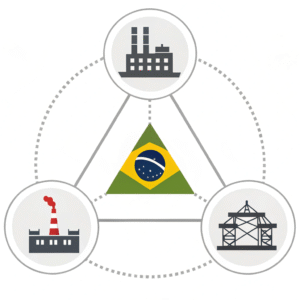
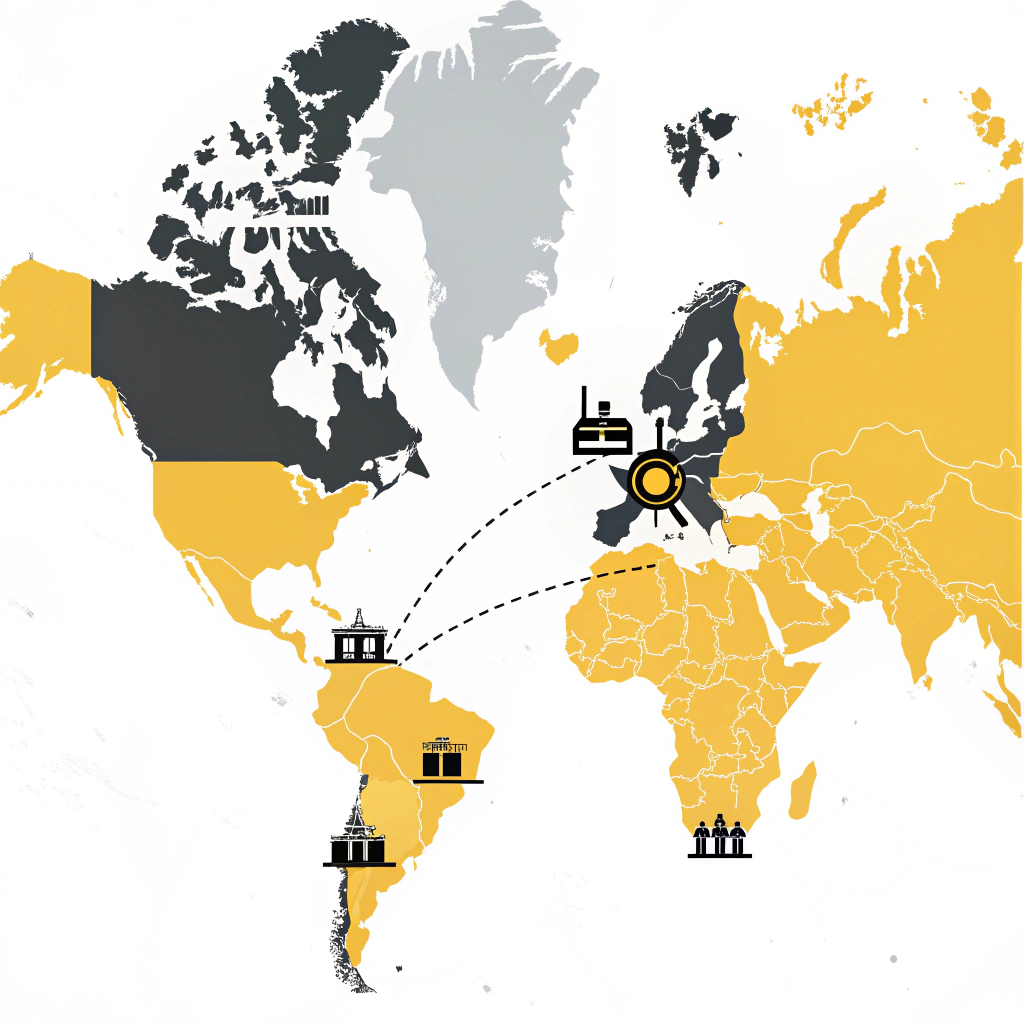
A concise way to say it: Stanley tools are produced across the U.S., China, Mexico, the UK, Brazil, Italy and the Czech Republic[^1], each site contributing differently to cost, consistency and scale.
Table of Contents
- Why does Stanley’s production base matter for value-focused buyers?
- What are the real differences across China, Brazil and U.S. lines?
- Which process controls should buyers verify in a Stanley OEM audit?
- How should you judge durability, service support and long-term ROI with Stanley?
- Conclusion
- External References
Why does Stanley’s production base matter for value-focused buyers?
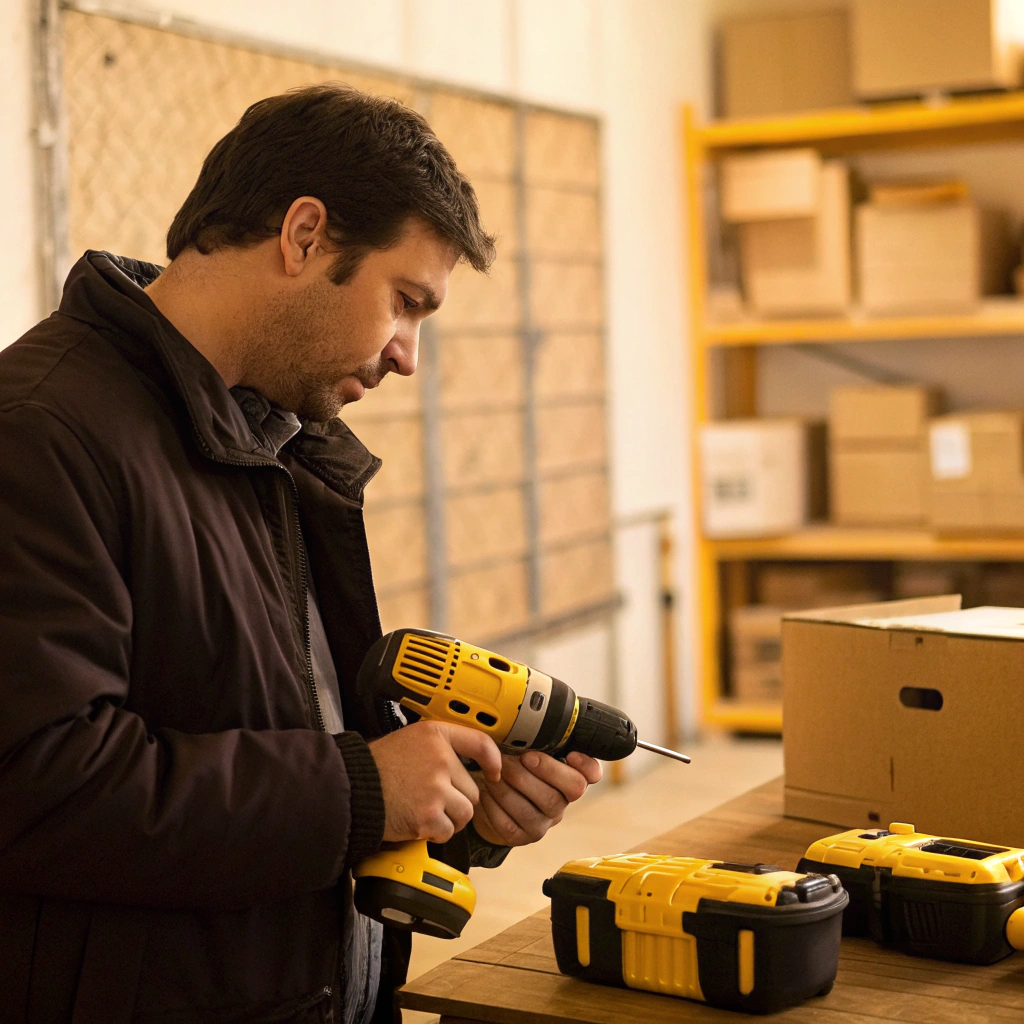
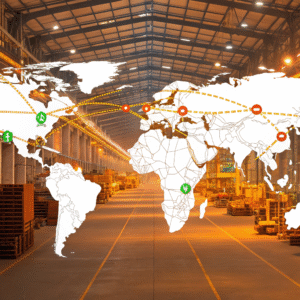
Stanley’s manufacturing network spans the U.S., China, Mexico, Brazil, Italy, and the Czech Republic. That spread was not built for marketing—it grew out of cost pressure, regional demand, and the logic of supply-chain density.
China and Mexico dominate high-volume production; the U.S. and Europe contribute selective premium lines. For a brand serving mainstream buyers, this multi-origin model becomes a balancing act between affordability and predictable quality.
From my own experience, buyers rarely ask, “Where was this tool made?” out of patriotism. They ask because a tool’s origin often hints at how many hands it has passed through, which components it relies on, and how stable the surrounding ecosystem is. Differences can emerge not from nationality but from how tightly each plant’s processes are managed.
| Production Region | Role | Risk Level |
|---|---|---|
| U.S. | Premium hand tools, select components | Low |
| China | High-volume consumer power tools | Medium–High |
| Mexico | Mass-market electric tools & assemblies | Medium |
What are the real differences across China, Brazil and U.S. lines?
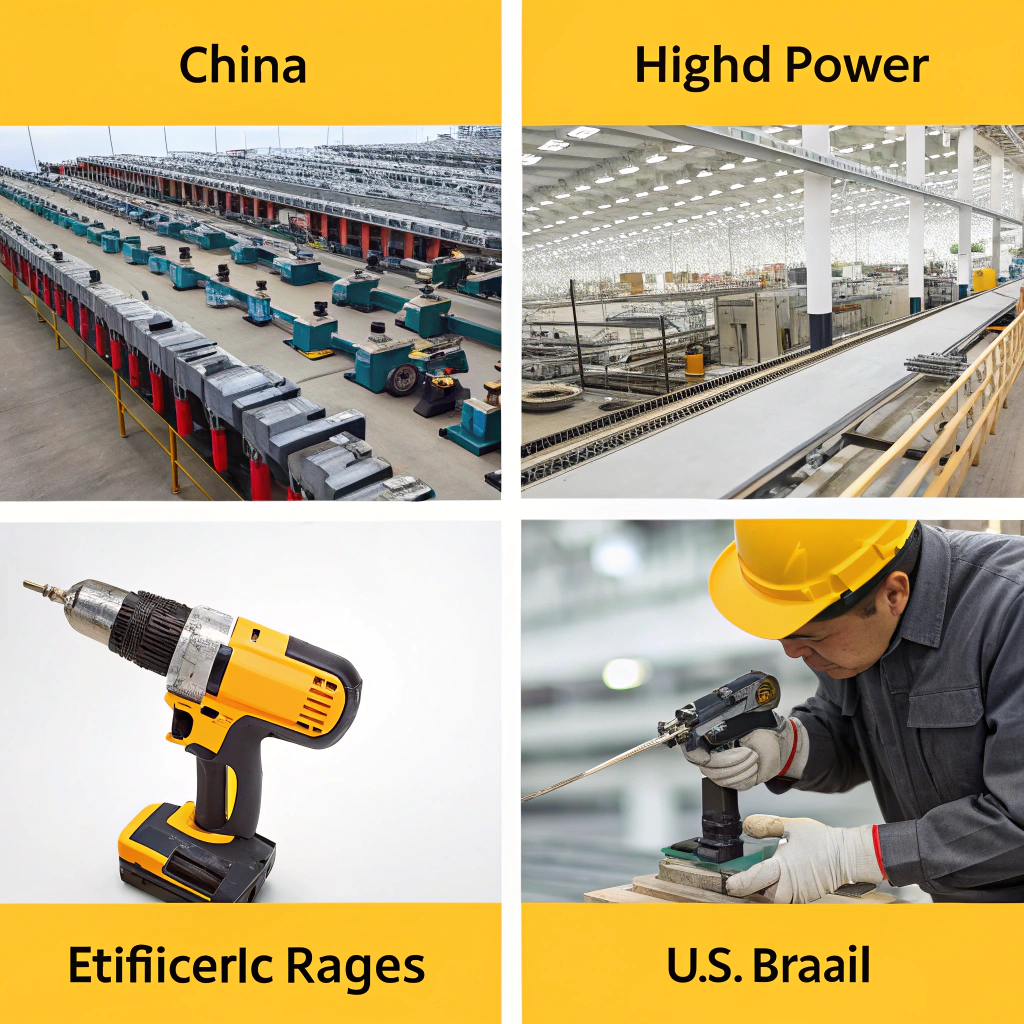
China remains Stanley’s backbone for high-volume consumer tools[^3]. Scale is the real advantage—motors, housings, gears, batteries, all within driving distance. Brazil fills a similar role for Latin America, offering reliable mid-range assembly and lower logistics cost for the region.
The U.S., on the other hand, focuses on iconic Stanley products—tapes, knives, specialty hand tools—and certain precision components. These lines are less about volume and more about heritage and control.
Therefore, comparing “made in China” and “made in USA” often confuses output role with build quality. The more useful question is what each plant is asked to achieve.
| Region | Strength | Typical Products |
|---|---|---|
| China | Scale, speed, dense supply chain | Consumer power tools |
| Brazil | Regional efficiency & logistics | Mid-range electric tools |
| U.S. | Precision, iconic hand tools | Tapes, knives, metal tools |
Which process controls should buyers verify in a Stanley OEM audit?
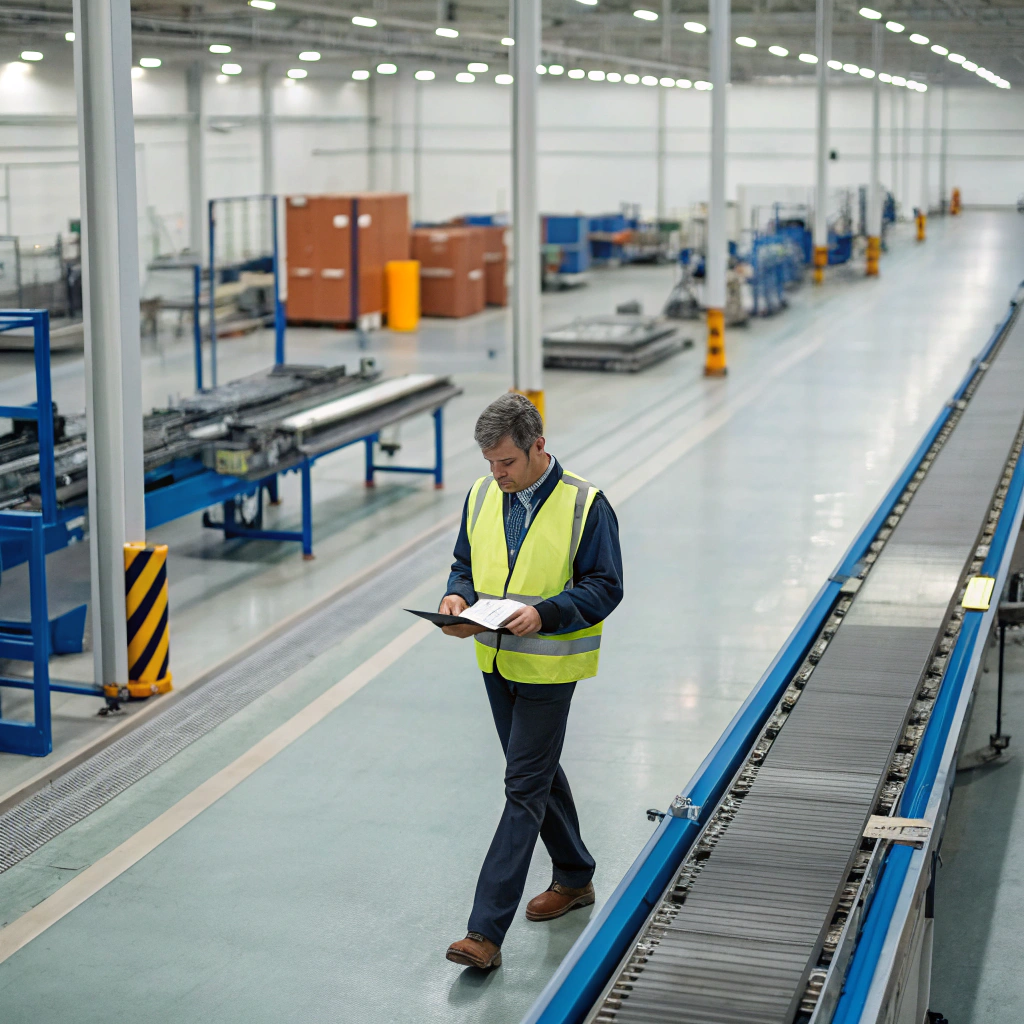
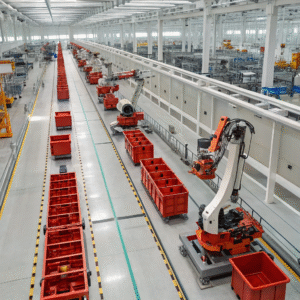
When auditing a Stanley-style OEM factory—especially in China or Mexico—the first thing I look for is rhythm. A factory with discipline moves with quiet coordination: incoming checks, motor sorting, gear measurement, torque tests, battery validation, and a rework area that shows more learning than scrambling.
Factories producing value-market tools don’t fail because of technology gaps; they fail because their routines are brittle.
For example, a plant that checks motor balance only once per shift will see vibration failures months later.
A plant that calibrates torque wrenches daily will outperform a competitor that does it weekly—no matter where either plant is located.
| Audit Step | What to Verify | Why It Matters |
|---|---|---|
| Incoming QC | Motor sorting, gear measurement | Prevents systemic defects |
| Battery Process | [BMS calibration, weld consistency](https://www.intertek.com/energy-storage/battery/second-life/)[^5] | Longevity + safety |
| Assembly Torque | Sampling rate, calibration logs | Ensures real-world performance |
| Rework Area | Failure categorization | Reveals structural weaknesses |
How should you judge durability, service support and long-term ROI with Stanley?
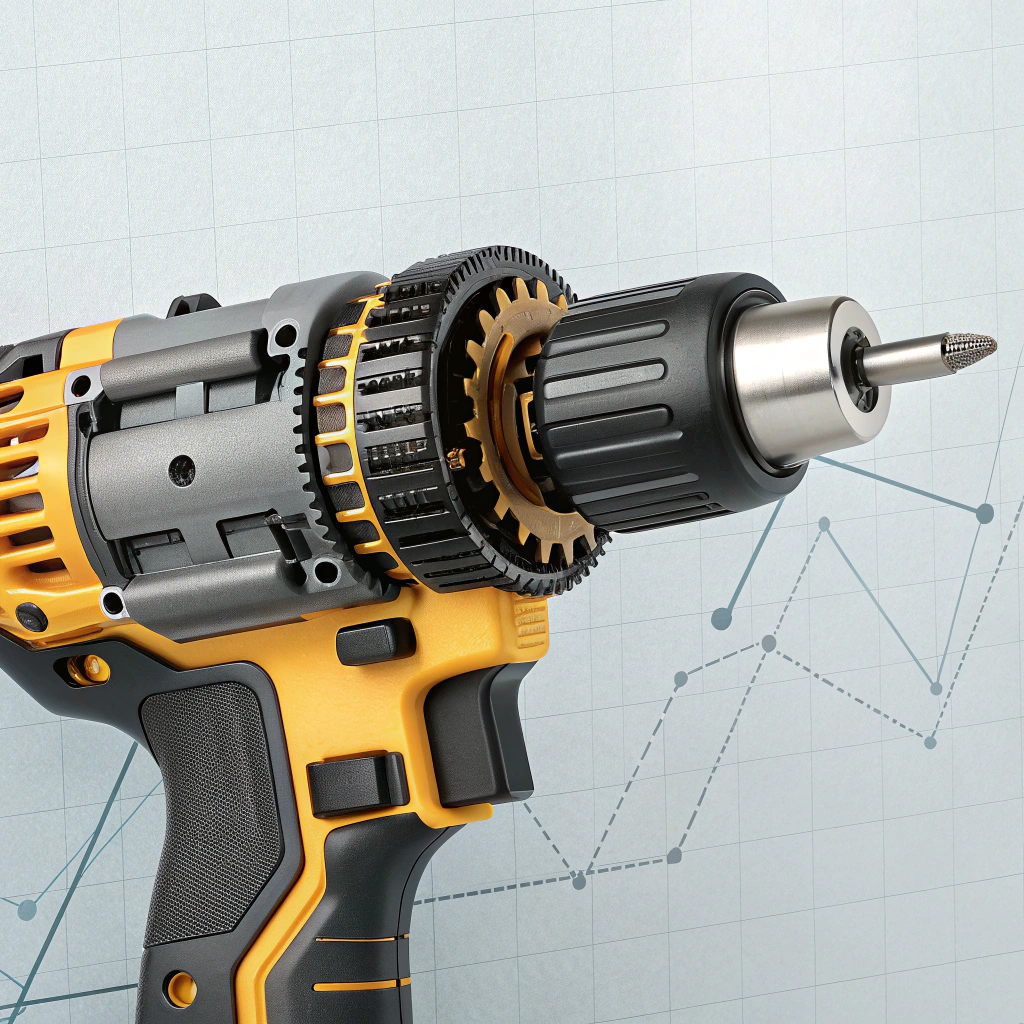
Durability in Stanley’s segment rarely comes from dramatic engineering. Instead, it rests on steady, repeatable processes: bearings that don’t wobble, gears that match their hardness spec, batteries that don’t drift after 50 cycles.
Most failures I’ve seen in value-market tools trace back to rushed QC or inconsistent supplier parts—not catastrophic design flaws.
Moreover, Stanley benefits from something many budget brands don’t have: the weight of a global group behind it. Service networks, parts inventories, and standardized testing routines all soften long-term risk.
As a result, buyers who use Stanley as a “solid baseline tool” often see predictable ROI across fleets, especially when expectations remain grounded in its market positioning.
| Cost Factor | Buyer Blind Spot | Practical Note |
|---|---|---|
| Battery cells | Low-end cells degrade faster | [Request cycle-test data](https://www.intertek.com/energy-storage/battery/)[^6] |
| Gears & bearings | Hardness variance causes noise & wear | Ask for supplier consistency records |
| QC time | Often shortened to meet volume | Lock QC steps into your PO |
| Packaging | Cheap boxes cause transit damage | Run drop tests before shipment |
| Warranty risk | Not factored into cost | Estimate 3–5 year fleet ROI |
Conclusion
Stanley’s manufacturing network is practical rather than poetic. China and Mexico handle volume, the U.S. and Europe protect heritage lines, and the whole system steadies itself through routine rather than glory.
The tools don’t aim to dazzle. They aim to endure quietly—enough for buyers who value predictability over prestige.
And in a world where low-cost tools often fail early, “predictable” becomes a kind of comfort all on its own.
References
[^1]: Stanley Black & Decker global reach overview of facilities and manufacturing footprint. ↩︎
[^2]: Supply Chain Dive article on shifting cordless tool production from China toward Mexico and the company’s broader supply chain strategy. ↩︎
[^3]: CTInsider report on reducing reliance on China for U.S. tool sales while maintaining a wider China manufacturing base for other markets. ↩︎
[^4]: ISO overview of quality management systems and process-based control under ISO 9001. ↩︎
[^5]: Intertek guidance on battery pack weld quality and BMS validation for second-life and energy-storage applications. ↩︎
[^6]: Intertek summary of battery testing services including cycle-life and safety evaluations. ↩︎